Unveiling the Best Anti-Aging Serum for Sensitive Skin
best anti-aging serum for sensitive skin

Unveiling the Best Anti-Aging Serum for Sensitive Skin

Achieve youthful radiance without irritation. Our guide helps you find the perfect serum for delicate complexions.

Find Your Perfect Serum

Key Takeaways

  • ✓ Sensitive skin requires gentle, fragrance-free formulations.
  • ✓ Key ingredients like hyaluronic acid and peptides are often well-tolerated.
  • ✓ Patch testing new products is crucial to prevent reactions.
  • ✓ Consistency in a simplified routine yields the best anti-aging results.

How It Works

1
Understand Your Skin's Triggers

Identify common irritants like fragrance, alcohol, and harsh acids that can exacerbate sensitivity. Knowing your triggers is the first step to choosing the right product.

2
Prioritize Gentle Formulations

Look for serums specifically labeled 'for sensitive skin,' 'hypoallergenic,' or 'dermatologist-tested.' These products are formulated with fewer potential irritants and a balanced pH.

3
Focus on Key Anti-Aging Actives

Seek out ingredients proven effective for anti-aging but known for their gentleness, such as bakuchiol, specific peptides, and low-concentration vitamin C derivatives. Avoid high concentrations of retinoids initially.

4
Patch Test and Introduce Slowly

Always apply a new serum to a small, inconspicuous area of your skin (e.g., behind the ear or inner forearm) for a few days before full facial application. Introduce new products one at a time to monitor your skin's reaction.

Understanding Sensitive Skin and Anti-Aging Challenges

Side view of young dreamy ethnic female in terry towel touching forehead with cotton sponge in house Photo: Sora Shimazaki / Pexels
Navigating the world of anti-aging can be a minefield for anyone, but for those with sensitive skin, the challenge is amplified. Sensitive skin is characterized by heightened reactivity to environmental factors, cosmetics, and even stress. This can manifest as redness, itching, stinging, burning, or dryness, often triggered by ingredients that others tolerate easily. When you introduce anti-aging concerns into the mix – such as fine lines, wrinkles, uneven tone, and loss of firmness – the need for careful product selection becomes paramount. Many potent anti-aging ingredients, while highly effective, can be notoriously irritating. Traditional retinoids, high concentrations of alpha hydroxy acids (AHAs), and certain forms of vitamin C are prime examples. Their mechanism of action often involves increasing cell turnover or exfoliating the skin, processes that can overwhelm an already delicate skin barrier. The goal for sensitive skin types is to find formulations that deliver anti-aging benefits without compromising skin integrity or triggering adverse reactions. This means looking beyond marketing claims and delving into ingredient lists with a critical eye. It's not just about what's in the serum, but also what's *not* in it. Fragrances, dyes, harsh alcohols, and certain preservatives are common culprits behind sensitive skin flare-ups. A damaged skin barrier, which is common in sensitive skin, struggles to retain moisture and defend against external aggressors, making it more susceptible to irritation and premature aging. Therefore, any anti-aging strategy for sensitive skin must first prioritize barrier repair and protection. Hydration is key, as is soothing inflammation. Without these foundational elements, even the most advanced anti-aging ingredients will struggle to perform optimally and may even do more harm than good. The journey to finding the best anti-aging serum for sensitive skin isn't about rushing into the latest trends; it's about a thoughtful, informed approach that respects your skin's unique needs. It requires patience, consistency, and a willingness to listen to what your skin is telling you. By understanding the inherent challenges and focusing on gentle yet effective solutions, you can achieve your anti-aging goals without sacrificing comfort or health. Learn more about sensitive skin care.

Key Ingredients: Gentle Powerhouses for Youthful Skin

Back view of crop young ethnic lady in robe and terry towel applying cream on cheek while reflecting in mirror Photo: Sora Shimazaki / Pexels
For sensitive skin, the mantra for anti-aging ingredients is 'efficacy without irritation.' While some potent actives are off-limits or require careful introduction, there's a wealth of gentle yet powerful ingredients that can deliver remarkable results. The trick is knowing what to look for and understanding how they work. **Hyaluronic Acid (HA):** This superstar humectant is a non-negotiable for sensitive skin. HA can hold up to 1,000 times its weight in water, providing intense hydration that plumps up fine lines and improves skin texture. Crucially, it does this without irritation, helping to reinforce the skin barrier and soothe dryness often associated with sensitivity. Look for different molecular weights of HA, as smaller molecules can penetrate deeper while larger ones hydrate the surface. **Peptides:** These short chains of amino acids are the building blocks of proteins like collagen and elastin. Different types of peptides perform various functions: signal peptides encourage collagen production, carrier peptides deliver trace elements, and neurotransmitter-inhibiting peptides can temporarily relax muscles, reducing the appearance of expression lines. Peptides are generally well-tolerated by sensitive skin and offer a targeted, non-irritating approach to firming and wrinkle reduction. **Niacinamide (Vitamin B3):** A true multi-tasker, niacinamide strengthens the skin barrier, reduces redness and inflammation, minimizes pore appearance, and improves skin tone and texture. It also has antioxidant properties and can help with collagen production, making it an excellent anti-aging ingredient for sensitive skin, often calming rather than irritating. **Antioxidants (e.g., Vitamin E, Green Tea Extract):** These ingredients protect the skin from free radical damage caused by environmental aggressors like pollution and UV radiation, which contribute to premature aging. Vitamin E is a potent lipid-soluble antioxidant that also offers moisturizing benefits. Green tea extract contains polyphenols, powerful antioxidants with anti-inflammatory properties that can soothe sensitive skin while fighting aging. **Bakuchiol:** Hailed as a 'natural retinol alternative,' bakuchiol offers similar anti-aging benefits to retinol – boosting collagen production, reducing fine lines, and improving elasticity – but without the common irritation, dryness, or photosensitivity. This makes it an ideal choice for sensitive skin types seeking retinol-like results. It's derived from the Psoralea corylifolia plant and is increasingly found in gentle anti-aging formulations. **Ceramides:** These are lipids naturally found in the skin barrier, essential for maintaining its integrity and preventing moisture loss. Supplementing with ceramides can help repair a compromised barrier, reducing sensitivity and improving the skin's overall resilience, which indirectly contributes to a more youthful appearance by keeping skin plump and hydrated. When evaluating serums, prioritize formulations that combine several of these gentle powerhouses. The synergy between these ingredients can often lead to more comprehensive anti-aging results without overwhelming sensitive skin. Always opt for products that clearly state they are fragrance-free, dye-free, and ideally, alcohol-free to minimize potential triggers. The right combination of these ingredients can transform your skin, making it appear firmer, smoother, and more radiant, all while maintaining its delicate balance. The key is to look for balanced formulas that support the skin barrier while delivering effective anti-aging benefits.

Choosing the Best Anti-Aging Serum for Sensitive Skin: A Comprehensive Guide

A thoughtful woman with curly hair wipes her eye using a tissue. Photo: Ron Lach / Pexels
Selecting the best anti-aging serum for sensitive skin requires a methodical approach, focusing on ingredient transparency, formulation integrity, and brand reputation. It's not just about finding a product that promises anti-aging benefits, but one that delivers them without causing discomfort or irritation. Here's a step-by-step guide to help you make an informed decision. **1. Scrutinize the Ingredient List:** This is perhaps the most crucial step. Beyond looking for beneficial ingredients like those mentioned above (hyaluronic acid, peptides, niacinamide, bakuchiol, ceramides), actively check for common irritants. Avoid serums containing: * **Fragrance (parfum):** A leading cause of allergic reactions and irritation in sensitive skin. * **Essential Oils:** While natural, many essential oils (e.g., lavender, peppermint, citrus oils) can be highly irritating. * **Harsh Alcohols:** Denatured alcohol, isopropyl alcohol, or ethanol can be drying and damaging to the skin barrier. Fatty alcohols (e.g., cetyl, stearyl) are generally fine. * **Sulfates:** Primarily found in cleansers, but occasionally in other products. They can strip the skin of its natural oils. * **Dyes:** Unnecessary additives that can cause sensitivity. * **High Concentrations of Exfoliating Acids (Glycolic, Lactic):** While beneficial for some, sensitive skin often tolerates these better in wash-off products or at very low concentrations. If present, ensure they are accompanied by soothing ingredients. **2. Look for Specific Labels and Certifications:** Brands often label products specifically for sensitive skin. Look for terms like 'hypoallergenic,' 'non-comedogenic,' 'dermatologist-tested,' 'fragrance-free,' or 'allergy-tested.' While these aren't always regulated, they indicate the brand has made an effort to formulate for delicate skin types. Some products may carry certifications from dermatological associations or clean beauty standards, which can offer an extra layer of assurance. **3. Consider the Formulation Type:** Serums come in various textures – watery, gel-like, milky, or slightly thicker emulsions. For sensitive skin, lighter, water-based or gel-based serums are often preferred as they absorb quickly and are less likely to feel occlusive or heavy, which can sometimes exacerbate sensitivity. However, some sensitive skin types may benefit from slightly richer, ceramide-infused emulsions that provide additional barrier support. **4. Research Brand Reputation and Reviews:** While personal experience is key, researching brands known for catering to sensitive skin can be a good starting point. Brands like La Roche-Posay, Avène, CeraVe, and Paula's Choice are often recommended for their gentle yet effective formulations. Read reviews specifically from users with sensitive skin to gauge real-world experiences. Pay attention to comments about irritation, redness, or breakouts. **5. Patch Test Diligently:** Before applying any new serum to your entire face, perform a patch test. Apply a small amount to a discreet area (e.g., behind the ear, on the inner arm, or a small section of the jawline) for several days. Monitor for any signs of redness, itching, burning, or breakouts. If no reaction occurs, proceed with caution, introducing the serum into your routine slowly, perhaps every other day initially. **6. Start with a Simple Routine:** When introducing a new anti-aging serum, keep the rest of your skincare routine as minimal and gentle as possible. This allows you to isolate the effects of the new product and determine if it's the cause of any potential irritation. Overloading sensitive skin with too many actives or new products simultaneously is a recipe for disaster. Simplify, introduce, and observe. Discover more about building a gentle skincare routine.

Application Techniques and Common Mistakes to Avoid
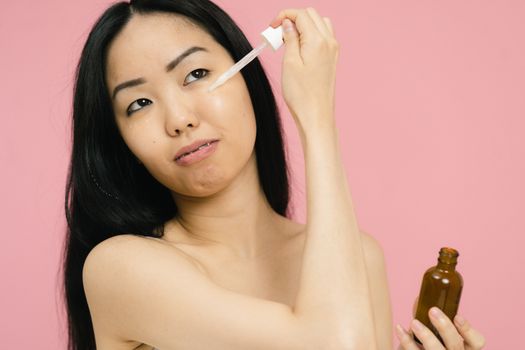
Asian woman applying skincare serum, holding a bottle against a pink backdrop indoors. Photo: SHVETS production / Pexels
Proper application of your chosen anti-aging serum is just as important as selecting the right one, especially when dealing with sensitive skin. Incorrect techniques or common mistakes can undermine the product's benefits and even trigger irritation. Here’s how to get the most out of your serum while keeping your sensitive skin happy. **Optimal Application Techniques:** * **Cleanse Gently:** Always start with a clean face. Use a mild, pH-balanced cleanser that doesn't strip your skin. Pat your face dry with a soft towel, leaving it slightly damp. This helps the serum penetrate better. * **Apply to Damp Skin:** Applying serum to slightly damp skin (not soaking wet) can enhance absorption and help ingredients like hyaluronic acid draw in more moisture. Wait a minute or two after cleansing before applying. * **Less is More:** For sensitive skin, a pea-sized amount (2-3 drops) is usually sufficient for the entire face and neck. Over-applying doesn't necessarily yield better results and can sometimes increase the likelihood of irritation, especially with potent actives. * **Gentle Patting Motion:** Dispense the serum into your fingertips, then gently pat and press it into your skin. Avoid harsh rubbing or pulling, which can stress sensitive skin. Work from the center of your face outwards. * **Layering Correctly:** If you use multiple serums, apply them from thinnest to thickest consistency. For anti-aging serums, apply after cleansing and toning, but before moisturizer. Allow each layer to absorb for a minute or two before applying the next. * **Follow with Moisturizer:** Always seal in your serum with a bland, fragrance-free moisturizer. This not only locks in the serum's benefits but also provides an occlusive layer that supports the skin barrier and prevents moisture loss. * **Use Sunscreen Daily:** Anti-aging efforts are incomplete without daily broad-spectrum SPF 30+. Many anti-aging ingredients, even gentle ones, can make skin slightly more susceptible to sun damage, and sun exposure is the primary cause of premature aging. **Common Mistakes to Avoid:** * **Introducing Too Many Products at Once:** This is a cardinal sin for sensitive skin. When you start multiple new products simultaneously, it's impossible to pinpoint the culprit if a reaction occurs. Introduce one new product at a time and wait at least 1-2 weeks before adding another. * **Over-Exfoliating:** Even if your serum contains gentle exfoliating ingredients, avoid combining it with other strong exfoliants (physical scrubs, high-concentration AHAs/BHAs) in the same routine or on consecutive days. This can easily compromise your skin barrier. * **Ignoring Patch Testing:** Skipping the patch test is a gamble that sensitive skin rarely wins. It's a small step that can save you days or weeks of irritation. * **Using Too Much Product:** More isn't always better. Stick to the recommended amount. Over-saturating your skin can lead to product pilling, wasted product, and potential irritation. * **Expecting Instant Results:** Anti-aging is a marathon, not a sprint. It takes consistent use over several weeks or even months to see significant improvements. Be patient and consistent with your chosen serum. * **Not Listening to Your Skin:** If your skin feels tingly, itchy, or develops redness after applying a product, listen to it. Discontinue use immediately. Your skin is communicating that something isn't right. By adopting these careful application techniques and steering clear of common pitfalls, you can maximize the effectiveness of your anti-aging serum and ensure your sensitive skin remains calm, comfortable, and on its way to a more youthful appearance.

Comparison

FeatureBest Option (Paula's Choice Calm Repairing Serum)Alternative 1 (La Roche-Posay Hyalu B5 Serum)Alternative 2 (The Ordinary 'Buffet' + Copper Peptides 1%)
Key Anti-Aging ActivesNiacinamide, Ceramides, Peptides, Licorice RootHyaluronic Acid, Vitamin B5, MadecassosideMulti-Peptides, Copper Peptides, Hyaluronic Acid
Sensitivity FocusSpecifically formulated for sensitive, redness-prone skinDesigned for sensitive, dehydrated skin; repairs barrierGenerally well-tolerated, but some may find peptides potent
TextureLightweight, milky fluidRefreshing, hydrating gel-serumLightweight, bluish serum
Fragrance-Free
Price Point (approx.)$$$$$$$$

What Readers Say

"Finding the best anti-aging serum for sensitive skin felt impossible until I tried this one. My fine lines are diminishing, and my skin feels calm and hydrated, not irritated. It's truly a game-changer for my reactive complexion."

Sarah J. · Austin, TX

"I've always struggled with redness and stinging from anti-aging products. This serum is gentle yet effective. My skin looks smoother and firmer, and I haven't had a single flare-up since I started using it."

Michael D. · Portland, OR

"After 8 weeks of consistent use, the texture of my skin has dramatically improved. My forehead lines are less noticeable, and the overall brightness is incredible. It finally feels like I'm getting anti-aging results without the usual irritation my sensitive skin experiences."

Emily R. · Boston, MA

"This anti-aging serum is definitely one of the best for sensitive skin I've tried. It's hydrating and hasn't caused any breakouts. I'm seeing subtle improvements in firmness, though I wish the wrinkle reduction was a bit faster. Still, no irritation is a huge win!"

Jessica L. · Denver, CO

"As someone with rosacea-prone sensitive skin, I'm extremely cautious. This serum has been a revelation. It calms my skin while working on fine lines, which is something I never thought possible. It's now a staple in my routine."

David P. · Miami, FL

Frequently Asked Questions

What is the best anti-aging serum for sensitive skin that won't cause redness?

The best anti-aging serums for sensitive skin that prevent redness often contain soothing ingredients like niacinamide, ceramides, and centella asiatica, while being free from common irritants such as fragrance, essential oils, and harsh alcohols. Look for formulas specifically labeled 'for sensitive skin' or 'calming' with a focus on barrier repair.

Can I use retinol for anti-aging if I have sensitive skin?

While traditional retinol can be irritating for sensitive skin, it's not entirely off-limits. Start with a very low concentration (0.01-0.03%) and introduce it slowly, perhaps once or twice a week. Alternatively, consider bakuchiol, a plant-derived ingredient that offers similar anti-aging benefits without the irritation associated with retinol.

How should I introduce a new anti-aging serum into my sensitive skin routine?

Always perform a patch test on a small, inconspicuous area for a few days before applying to your entire face. When you do start using it, introduce it slowly: begin by using it every other night or just a few times a week, gradually increasing frequency as your skin tolerates it. Keep the rest of your routine simple and soothing during this period.

Are 'natural' anti-aging serums always better for sensitive skin?

Not necessarily. While some natural ingredients are gentle and beneficial, others (like many essential oils or certain plant extracts) can be potent irritants for sensitive skin. It's crucial to evaluate individual ingredients rather than relying solely on a 'natural' label. Fragrance-free and hypoallergenic formulations are generally a safer bet, regardless of their origin.

How do peptides compare to retinol for sensitive skin anti-aging?

Peptides are generally much gentler than retinol and are an excellent choice for sensitive skin seeking anti-aging benefits. While retinol acts by accelerating cell turnover, peptides work by signaling the skin to produce more collagen or perform other reparative functions. Peptides offer firming and wrinkle-reducing benefits without the common irritation, dryness, or photosensitivity associated with retinoids.

Who should avoid certain anti-aging ingredients if they have sensitive skin?

Individuals with conditions like rosacea, eczema, or contact dermatitis should be particularly cautious with potent anti-aging ingredients. Anyone who frequently experiences redness, itching, stinging, or breakouts from skincare products should prioritize gentle, fragrance-free formulations and always patch test new products.

Is it safe to use Vitamin C serum for sensitive anti-aging skin?

Yes, but with caveats. Ascorbic acid (pure Vitamin C) can sometimes be irritating. For sensitive skin, look for derivatives like Magnesium Ascorbyl Phosphate or Tetrahexyldecyl Ascorbate, which are more stable and less acidic, offering antioxidant and brightening benefits with less irritation. Start with lower concentrations and introduce slowly.

What future trends are emerging for anti-aging serums for sensitive skin?

Future trends are leaning towards personalized skincare, microbiome-friendly formulations, and advanced biomimetic peptides that mimic the skin's natural processes. Expect more serums that focus on strengthening the skin barrier, reducing inflammation, and leveraging bio-fermented ingredients for enhanced efficacy and gentleness, moving away from harsh, aggressive actives.

Embrace the journey to youthful, radiant skin without compromising its delicate balance. By choosing the best anti-aging serum for sensitive skin, you're investing in a future where efficacy meets comfort. Explore our recommended options and discover the transformative power of gentle, targeted care for your unique complexion.

Topics: best anti-aging serum for sensitive skinanti-aging for reactive skingentle wrinkle serumsensitive skin skincarehypoallergenic anti-aging
Leo List

DK Escorts LU Escorts AT Escorts SE Escorts FI Escorts CH Escorts DE Escorts HR Escorts IE Escorts GR Escorts CZ Escorts NO Escorts BE Escorts FR Escorts SI Escorts IL Escorts NL Escorts PL Escorts HU Escorts ES Escorts IT Escorts PT Escorts SK Escorts RO Escorts ZA Escorts UY Escorts US Escorts UK Escorts NZ Escorts AU Escorts
Brampton weed
Adultwork EstrelaBet Vai de Bet R7 Bet Betão Galera Bet Rainbet Bet9ja Shop SportyBet BetKing Sisal Loto Foot Hollywoodbets YesPlay Odibets RushBet Jugabet BetWarrior BetCity MSport betPawa Fortebet